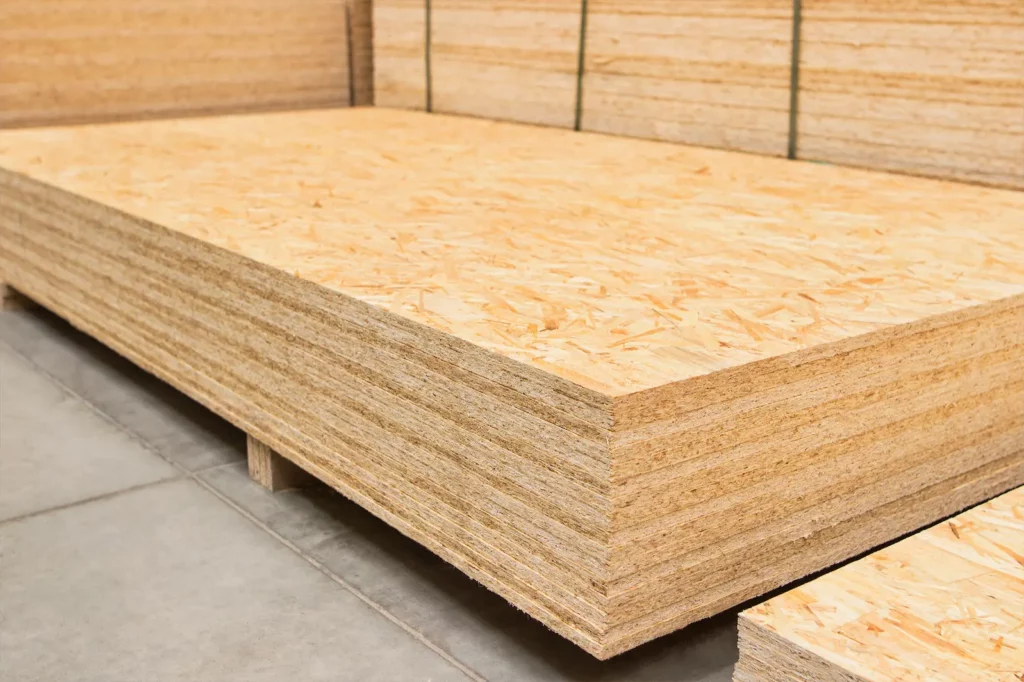
6 Key Benefits of Using lvl formwork timber Over Traditional Wood
Formwork materials are essential in concrete construction as they determine the quality of the finished structure and the efficiency of the building process. Laminated veneer lumber (LVL) formwork timber is an engineered alternative to traditional solid-sawn wood, made by bonding thin wood veneers together under heat and pressure. While many builders are familiar with traditional wood, it has limitations due to its natural composition and growth patterns.
Choosing the right formwork material is crucial as it affects project timelines, structural integrity, budget allocation, and environmental impact. Making the wrong choice can result in expensive delays, safety issues, and poor concrete finishes. Construction professionals need to consider various factors such as load-bearing requirements and reusability when specifying formwork systems.
This article explores 6 key benefits of using LVL formwork timber over traditional wood, focusing on how this engineered solution tackles common challenges faced on construction sites. We’ll look into:
- Superior strength and dimensional stability
- Environmental sustainability credentials
- Practical advantages during installation
- Long-term cost savings
- Enhanced design capabilities
- Critical usage considerations
Each benefit demonstrates why LVL formwork timber has become the preferred choice for contractors looking for reliable, efficient construction materials that provide consistent results across different project types.
What Makes LVL Formwork Timber Stronger Than Traditional Wood?
LVL formwork timber is stronger than traditional solid-sawn timber due to its engineered construction, which allows it to bear loads of up to 50% more. The manufacturing process aligns wood grain in parallel layers, creating a material that distributes stress uniformly across its entire structure.
1. Strength-to-Weight Ratio Advantage
The strength-to-weight ratio of LVL is one of its most valuable characteristics. A typical LVL beam weighs 25% less than an equivalent traditional timber beam but can support significantly heavier concrete loads during formwork applications. This efficiency comes from the elimination of natural wood defects—knots, splits, and grain irregularities—that compromise traditional timber’s performance.
2. Consistent Load-Bearing Capacity
Load-bearing capacity in LVL remains consistent throughout each piece. When supporting wet concrete during pouring operations, LVL formwork distributes pressure evenly across supporting beams and panels. Traditional timber, on the other hand, has weak points where natural growth characteristics create stress concentrations. A single knot in a critical location can reduce a traditional timber beam’s capacity by 30-40%.
3. Maintaining Structural Integrity Under Pressure
Structural integrity during concrete placement depends on formwork materials resisting deformation. LVL’s bonded veneer layers work together as a unified structure, preventing individual layer movement that causes failure. Each veneer layer measures approximately 3mm thick and is bonded with waterproof adhesives under controlled pressure and temperature.
Traditional timber reacts unpredictably to the heavy loads imposed during concrete work. A standard formwork setup might experience pressures exceeding 50 kN/m², especially in tall wall pours or deep foundation work. LVL maintains its dimensional accuracy under these conditions, ensuring concrete elements cure to precise specifications.
4. Warping, Shrinking, and Splitting Resistance
Warping resistance sets LVL apart from conventional timber in challenging construction environments. Traditional wood has varying moisture levels and grain patterns that respond differently to environmental conditions. A 4-metre traditional timber beam can warp by 15-20mm when exposed to typical construction site humidity fluctuations.
LVL’s cross-laminated structure counteracts the natural tendency of wood to move with moisture changes, making it a more stable choice for formwork applications.
How Does LVL Provide Better Dimensional Stability and Durability?
LVL formwork timber maintains consistent dimensions across varying environmental conditions, unlike traditional wood that expands, contracts, and distorts with changes in moisture. This dimensional stability stems from its unique manufacturing process and engineered composition.
The Manufacturing Process Behind LVL’s Stability
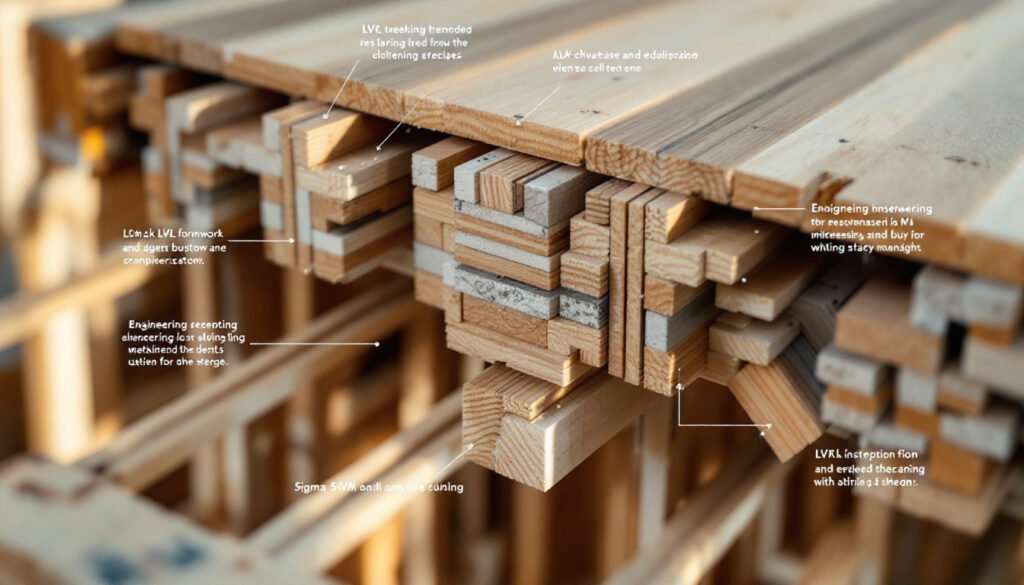
The production of LVL involves carefully selecting thin wood veneers, typically 3mm thick, which are dried to precise moisture content levels before assembly. Manufacturers align these veneers with the grain running parallel to the length of the beam, then bond them together using high-strength adhesives under controlled heat and pressure. This process creates an engineered wood product where natural defects like knots, splits, and grain irregularities are distributed throughout the material rather than concentrated in weak spots.
The adhesive system plays a crucial role in LVL’s performance. Modern phenol-formaldehyde resins create waterproof bonds between veneers, preventing moisture penetration that would compromise the material’s integrity. These bonds remain stable across temperature fluctuations and variations in humidity commonly encountered on construction sites.
Uniform Strength Across the Entire Length
Each LVL beam exhibits consistent structural properties from end to end. The layering process eliminates the natural variations found in solid timber, where growth rings, density differences, and seasonal growth patterns create unpredictable weak points. Construction teams can rely on published load tables knowing the material will perform identically whether used at the beginning or end of a production run.
This uniformity extends to warping resistance. Traditional timber often develops twists, cups, or bows as internal stresses release over time or as one side absorbs more moisture than another. LVL’s cross-laminated structure balances these forces, keeping formwork panels flat and true throughout multiple concrete pours.
Resistance to Moisture-Related Damage
Natural timber’s cellular structure acts like a sponge, absorbing water through end grain and along growth rings. This moisture absorption causes dimensional changes:
- Swelling when exposed to rain or high humidity
- Shrinkage during dry conditions
- Cupping as surface layers dry faster than the core
- Checking and surface cracks from rapid moisture loss
Why Is LVL Formwork Timber Considered More Environmentally Sustainable?
LVL formwork timber is considered more environmentally sustainable than traditional timber due to its sourcing from responsibly managed forests and efficient manufacturing processes. Here’s how LVL achieves this:
Sustainable Forestry Practices
The raw materials for LVL come from certified sustainable forestry operations that prioritise regeneration and biodiversity. Unlike traditional timber harvesting which often requires mature, old-growth trees, LVL manufacturers source wood from:
- Plantation forests specifically cultivated for engineered wood products
- Thinning operations that improve forest health
- Smaller trees reaching harvest maturity in 15-25 years versus 50-100 years for conventional timber
- Multiple tree species, reducing pressure on any single forest ecosystem
This diversified sourcing approach ensures continuous forest cover whilst providing construction materials, creating a renewable cycle that traditional timber practices struggle to match.
Efficient Manufacturing Reduces Waste
The LVL production process exemplifies efficient manufacturing by converting up to 85% of raw timber into usable product. Thin veneers are peeled from logs in continuous sheets, minimising offcuts and sawdust compared to traditional sawmill operations which typically achieve only 50-60% yield.
Manufacturing facilities incorporate closed-loop systems that:
- Recycle adhesive overspray
- Convert wood waste into biofuel for plant operations
- Utilise bark and trimmings for energy generation
- Capture and treat emissions to reduce air pollution
These eco-friendly materials production methods significantly lower the carbon footprint per cubic metre of formwork timber produced.
Comparative Environmental Advantages
Traditional timber harvesting creates substantial environmental burdens through selective logging of premium-grade trees, extensive transportation of heavy solid-sawn beams, and high rejection rates for defective pieces. LVL addresses these concerns by:
Resource Efficiency: Creating consistent, high-performance beams from lower-grade logs that would be rejected for traditional formwork applications.
Transportation Impact: Lighter weight reduces fuel consumption during delivery—a critical factor when considering the environmental impact of construction projects.
How LVL Improves Practicality and Ease of Use on Construction Sites
Lightweight Materials for Reduced Strain
LVL formwork timber transforms daily construction operations through its lightweight materials and modular components that significantly reduce physical strain on workers. A single LVL panel weighs approximately 30-40% less than equivalent traditional timber formwork, allowing two workers to comfortably handle panels that would typically require three or four people. This weight advantage directly translates to faster installation times and reduced risk of workplace injuries.
Modular Design for Efficient Assembly
The modular design of LVL formwork systems creates a standardised approach to assembly that minimises on-site complications. Pre-cut panels arrive ready for immediate deployment, eliminating the need for extensive cutting, measuring, and adjusting that traditional timber demands. Construction teams can assemble formwork structures in a fraction of the time, with some projects reporting installation speed improvements of up to 50% compared to conventional wood systems.
Spanning Capabilities Without Additional Support
LVL’s engineered strength allows formwork to span distances of 4-6 metres without requiring intermediate support beams. Traditional timber typically needs additional bracing every 2-3 metres to maintain structural integrity. This extended spanning capability reduces the number of support posts cluttering the work area, creating safer walkways and improving access for workers and equipment.
The reduced support requirements also mean fewer components to transport, store, and install. Construction sites benefit from cleaner work zones with improved visibility and manoeuvrability. Concrete pouring operations proceed more efficiently when workers aren’t navigating around excessive support structures.
Reusability Benefits
Reusability stands as one of LVL formwork’s most practical advantages. Quality LVL panels maintain their structural properties through 50-100 uses when properly maintained, compared to traditional timber’s typical 5-15 uses. This extended service life means construction companies can deploy the same formwork across multiple projects without performance degradation.
The consistent quality of reused LVL formwork eliminates the unpredictability associated with recycled traditional timber. Each deployment delivers the same reliable performance, allowing project managers to plan with confidence. Sites avoid the common scenario of discovering warped or weakened timber pieces mid-project, which causes delays and safety concerns.
Labour cost savings accumulate rapidly through repeated use.
How Does LVL Formwork Offer Cost-Effectiveness Compared to Traditional Wood?
LVL formwork offers better cost-effectiveness through long-term savings that make up for its higher initial costs. While traditional timber may seem cheaper at first, LVL’s longer lifespan and lower operating costs provide significant financial benefits over the course of a project.
Initial Investment vs Long-Term Returns
The purchase price of LVL formwork is usually 20-30% higher than regular timber. This extra cost pays off in the long run because LVL formwork systems can be reused 50-100 times or more, while traditional timber can only be used 5-15 times. Construction companies can recover their investment within the first few projects and then enjoy years of additional use without having to replace anything.
Reduced Replacement Frequency and Maintenance Expenses
Traditional timber formwork wears out quickly on construction sites, which means boards need to be replaced often and constant checks for structural integrity are necessary. With LVL’s engineered composition, these recurring maintenance costs are eliminated. The material keeps its strength even after multiple uses and doesn’t suffer from warping, splitting, or surface damage like natural wood does. Site managers spend less time and money fixing formwork, inspecting it regularly, and replacing it in emergencies during critical construction periods.
Material Waste Reduction Benefits
Material waste reduction is another area where LVL formwork systems have a significant cost advantage. Traditional timber creates a lot of waste because:
- The dimensions are inconsistent, so trimming and adjustments have to be done on-site
- Damaged boards are thrown away after being used only a little bit
- Off-cuts are generated from custom sizing operations
- Moisture damage or structural failure leads to premature disposal
LVL comes in precise, standard sizes that minimise cutting waste. Its durability means fewer panels end up in skip bins, which directly reduces disposal fees and material procurement costs. Projects using LVL formwork report waste reductions of 40-60% compared to traditional timber operations.
Transport Savings Through Weight Advantages
The lighter weight of LVL formwork means transport savings during different stages of a project. A standard LVL panel weighs about 25-35% less than an equivalent traditional timber formwork panel but still has superior strength. This difference in weight leads to:
- Less fuel consumption when delivering materials to construction sites
- Fewer lorry trips needed for transporting materials.
What Construction Capabilities Are Enhanced by Using LVL Formwork Timber?
LVL formwork timber unlocks construction capabilities that traditional wood simply cannot match. The engineered uniformity of LVL creates consistent load distribution across every panel, enabling architects and engineers to push boundaries with architectural design flexibility previously limited by natural timber’s unpredictable grain patterns and strength variations.
Enabling Complex Geometric Structures
The predictable performance of LVL allows construction teams to create complex structures with confidence. Curved walls, cantilevered sections, and dramatic overhangs become feasible because every piece of LVL delivers identical structural properties. Traditional wood’s natural inconsistencies force designers to add safety margins and extra support, restricting creative possibilities.
LVL’s uniform strength distribution supports:
- Intricate curved formwork for architectural concrete features
- Thin-shell structures requiring precise dimensional control
- Long-span applications without intermediate support columns
- Multi-level formwork systems with complex geometries
Precision in Architectural Features
Detailed architectural elements demand materials that won’t compromise under pressure. LVL maintains its shape and dimensions throughout the concrete curing process, producing crisp edges, smooth surfaces, and exact angles. Traditional timber may warp or bow during concrete pouring, creating surface imperfections that require costly remediation.
The material’s consistency allows contractors to achieve 6 Key Benefits of Using lvl formwork timber Over Traditional Wood when executing sophisticated designs. Exposed concrete finishes, decorative patterns, and feature walls require formwork that won’t telegraph imperfections into the final surface—a standard LVL meets reliably.
Supporting Innovative Construction Methods
Modern construction techniques like modular building systems and prefabricated formwork assemblies rely on components that perform identically every time. LVL’s manufactured consistency makes it ideal for repetitive use across multiple projects. Each panel maintains its structural integrity through numerous pour cycles, unlike traditional wood that degrades unpredictably.
Builders working on high-rise developments benefit from LVL’s ability to handle increased hydrostatic pressure at lower levels without deflection. The material’s engineered properties eliminate guesswork when calculating formwork capacity for tall pours, reducing risk and enabling taller.
What Additional Factors Should Be Considered When Using LVL Formwork Timber?
Proper storage considerations and careful handling remain critical to maintaining LVL formwork’s structural integrity throughout its service life. While LVL offers superior performance characteristics, understanding these practical requirements ensures optimal results on construction sites.
Storage Considerations and Moisture Prevention
LVL formwork requires protected storage conditions to prevent moisture absorption that could compromise its engineered properties. Panels should be stored horizontally on raised platforms at least 150mm above ground level, with adequate spacing between layers to promote air circulation. Covering materials must allow ventilation whilst protecting against direct rainfall—sealed plastic wrapping creates condensation risks that encourage moisture penetration.
Moisture content exceeding 15% can weaken adhesive bonds between veneers and reduce load-bearing capacity. Storage areas need proper drainage systems and protection from standing water. Sites experiencing high humidity should implement dehumidification measures or rotate stock more frequently to maintain material quality.
Handling Guidelines to Prevent Delamination
Careful handling practices protect LVL formwork from physical damage that triggers delamination. Workers should avoid dropping panels or striking edges against hard surfaces, as impact forces can separate veneer layers at adhesive interfaces. When moving large sheets, teams should use appropriate lifting equipment and maintain even weight distribution across the panel’s length.
Cutting and drilling operations require sharp tools to prevent tearing or splintering that exposes internal layers to moisture. Edge sealing treatments applied to freshly cut surfaces provide additional protection. Inspection protocols before each use help identify early signs of delamination, such as visible gaps between veneers or surface irregularities.
Technological Advancements Enhancing Performance
Recent innovations in adhesive technology have significantly improved LVL formwork’s resistance to environmental stresses. Phenol-formaldehyde resins now offer enhanced water resistance and higher bond strength compared to earlier formulations. These advanced adhesives maintain structural integrity even under prolonged exposure to concrete’s alkaline environment during curing processes.
Surface treatments incorporating hydrophobic coatings create additional barriers against moisture penetration whilst improving release properties. These treatments reduce concrete adhesion, simplifying formwork removal and extending panel reusability. Some manufacturers apply UV-resistant finishes that protect against degradation from prolonged sun exposure, further enhancing durability in outdoor applications.
Conclusion
LVL formwork timber is a significant advancement in modern construction solutions, delivering measurable improvements across multiple performance dimensions. The 6 key benefits of using LVL formwork timber over traditional wood create a compelling case for its adoption:
- Superior strength and load-bearing capacity
- Exceptional dimensional stability
- Environmental sustainability
- Enhanced practicality
- Long-term cost-effectiveness
- Expanded design capabilities
The material’s engineered nature addresses fundamental weaknesses inherent in solid-sawn timber. Where traditional wood succumbs to warping, splitting, and moisture damage, LVL maintains structural integrity through demanding construction cycles. This reliability translates directly into safer job sites, reduced material waste, and faster project completion times.
Environmental considerations strengthen LVL’s position as the preferred formwork choice. Sustainable forest management practices, efficient use of smaller trees, and the material’s reusability align with the construction industry’s growing commitment to reducing its carbon footprint. These ecological advantages complement rather than compromise performance characteristics.
Future trends in formwork materials point towards continued innovation in LVL technology. Advanced adhesive systems, protective surface treatments, and digital integration tools are already enhancing durability and monitoring capabilities. Real-time sensor data provides unprecedented insight into structural performance during concrete pours, whilst digital modelling streamlines design and planning processes.
The construction sector’s evolution demands materials that balance mechanical excellence with environmental responsibility. LVL formwork timber meets this dual requirement whilst offering practical benefits that improve daily operations on site. As manufacturing techniques advance and sustainability standards tighten, LVL’s advantages over traditional wood will likely become even more pronounced.
This summary of benefits demonstrates why forward-thinking contractors and developers are transitioning to LVL formwork systems. The material doesn’t simply match traditional timber’s capabilities—it fundamentally exceeds them across every critical metric that matters in contemporary construction.
FAQs (Frequently Asked Questions)
What are the primary advantages of LVL formwork timber over traditional wood in construction?
LVL formwork timber offers six key benefits over traditional wood, including higher strength and load-bearing capacity, superior dimensional stability and durability, enhanced environmental sustainability, greater practicality and ease of use on construction sites, cost-effectiveness through reduced maintenance and waste, and improved construction capabilities allowing for complex architectural designs.
How does LVL formwork timber achieve greater strength compared to traditional wood?
LVL formwork timber is engineered by bonding thin wood veneers together, resulting in a uniform strength that provides a higher load-bearing capacity and better resistance to warping, shrinking, or splitting under stress. This structural integrity allows LVL to support heavy loads evenly, outperforming traditional timber.
In what ways is LVL formwork timber more environmentally sustainable than traditional wood?
LVL formwork timber is sourced from sustainably managed forests using fast-growing smaller trees. Its efficient manufacturing process reduces waste significantly compared to traditional timber harvesting practices. These eco-friendly attributes make LVL a more sustainable choice for modern construction projects.
Why is LVL formwork timber considered more practical and user-friendly on construction sites?
Due to its lightweight nature and modular design, LVL formwork timber facilitates quicker assembly and easier handling. It can span longer distances without additional support and is reusable, leading to labour cost savings and faster installation times compared to traditional wood materials.
How does the use of LVL formwork timber contribute to cost-effectiveness in construction?
Although LVL may require a higher initial investment, it offers long-term savings through reduced maintenance costs, less frequent replacements, decreased material waste, transportation savings due to lighter weight, and a higher salvage value. These factors collectively make LVL a cost-effective alternative to traditional wood.
What additional considerations should be taken into account when using LVL formwork timber?
Proper storage is essential to prevent moisture absorption that can compromise the material’s integrity. Careful handling is necessary to avoid delamination. Moreover, recent technological advancements such as advanced adhesives, surface treatments, digital modelling tools, and sensor integration enhance the performance and safety of LVL formwork in construction applications.
See more about: Understanding the Specifications of f14 grade plywood

