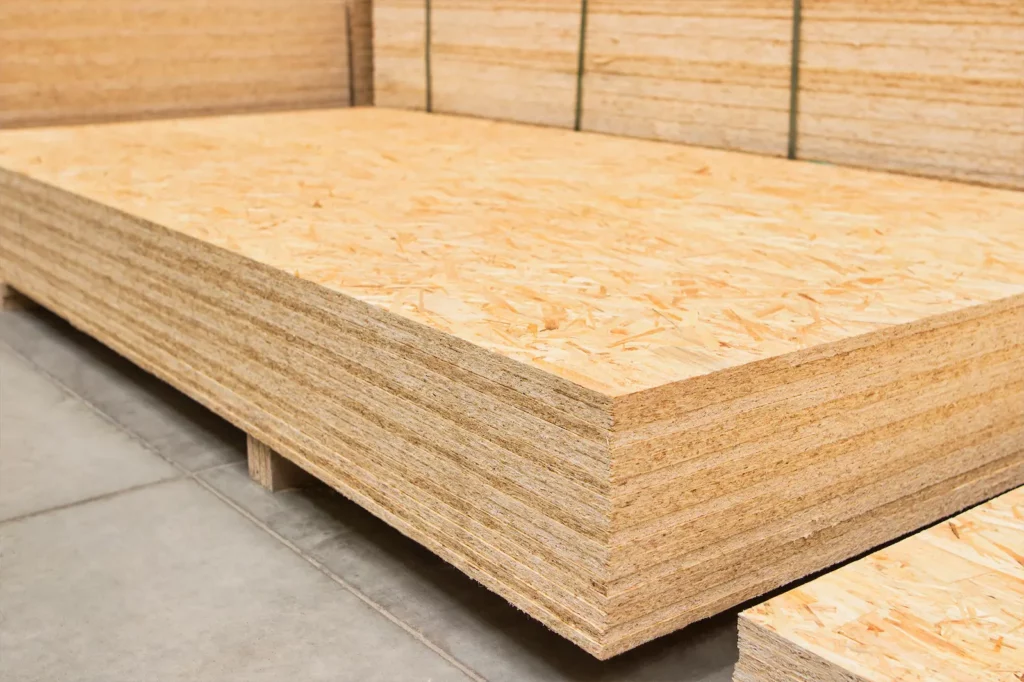
Understanding the Specifications of f14 grade plywood
What is F14 Grade Plywood and Why is it Important in Construction?
F14 grade plywood is a type of plywood specifically designed for load-bearing applications in construction. The “F” designation indicates it’s a stress-graded product, while the “14” refers to its bending strength measured in megapascals (MPa).
This structural plywood is an essential building material where strength and reliability are crucial. Builders and engineers depend on F14 grade plywood because it meets strict Australian/New Zealand standards (AS/NZS 2269), ensuring consistent performance across projects.
Why Is F14 Grade Plywood Important in Construction?
The significance of F14 grade plywood in construction comes from several reasons:
- Verified strength ratings: These allow engineers to calculate precise load capacities.
- Cost-effective performance: It offers better value compared to higher-grade alternatives.
- Standardised specifications: This simplifies building compliance and approval processes.
- Versatile applications: It can be used in both residential and commercial projects.
Understanding the specifications of F14 grade plywood helps builders choose the right materials for specific structural needs. This grade strikes a balance between moderate structural capacity and affordability, making it suitable for projects where extreme loads aren’t anticipated but dependable strength is still important.
Construction professionals appreciate F14 grade plywood for its predictable behaviour under stress. Unlike non-graded plywood products, F14 comes with certification guaranteeing its mechanical properties, leading to safer buildings and reduced liability risks for contractors and property owners.
What Does the F14 Stress Grade Indicate About Plywood Strength?
The F14 stress grade represents a specific structural performance benchmark, indicating that the plywood can withstand a characteristic bending strength of 14 megapascals (MPa). This numerical designation directly correlates to the material’s capacity to resist deformation and failure under load-bearing conditions.
Understanding the Stress Grading System
Stress grading in plywood functions as a standardised classification method that quantifies structural performance capabilities. The system assigns numerical values based on rigorous testing of bending strength and stiffness properties. Engineers and builders rely on these grades to select appropriate materials for specific load requirements.
The grading process evaluates multiple mechanical properties:
- Bending strength: Maximum stress the plywood can withstand before failure
- Modulus of elasticity: Measurement of stiffness and resistance to deflection
- Shear strength: Capacity to resist forces acting parallel to the surface
- Compression strength: Ability to withstand crushing forces
Bending Strength Characteristics of F14
F14 grade plywood delivers a characteristic bending strength of 14 MPa, positioning it as a mid-range structural option. This rating means the material can reliably support moderate loads in floor joists, wall frames, and roof structures without excessive deflection.
The bending strength directly influences span capabilities. A sheet of F14 plywood spanning between supports will maintain structural integrity under specified loads without sagging beyond acceptable limits. This property proves essential in applications where deflection could compromise building performance or aesthetics.
Stiffness and Structural Performance
The F14 designation encompasses specific stiffness requirements measured through modulus of elasticity values. Stiffness determines how much a plywood panel will bend under load, separate from its ultimate breaking point. Higher stiffness values mean less deflection under identical loading conditions.
F14 grade typically exhibits a modulus of elasticity around 10,000 MPa, providing adequate rigidity for most residential and light commercial applications. This stiffness ensures floors feel solid underfoot and walls remain true without noticeable warping.
Practical Implications for Builders
The F14 stress grade establishes clear load-bearing parameters that inform design decisions and construction practices. Builders can confidently specify this grade when designing structures with anticipated loads falling within its capacity range.
By understanding the significance of F14’s bending strength and stiffness characteristics, builders can optimise material selection for various applications:
- Floor systems: In multi-storey buildings or areas with heavy foot traffic, using F14 plywood as part of the floor framing system ensures sufficient support while minimising bounce or vibration.
- Wall assemblies: When constructing exterior walls subjected to wind loads or interior partitions requiring sound insulation properties, incorporating F14-grade panels enhances overall stability and performance.
- Roof constructions: For pitched roofs where snow accumulation is a concern or flat roofs demanding long spans between supports, specifying F14 plywood contributes to meeting both structural integrity requirements and aesthetic preferences.
In summary, the F14 stress grade serves as an important indicator of plywood’s bending strength capabilities. Its designation reflects not only the material’s ability to bear loads but also its contribution towards creating durable buildings that stand the test of time.
What Materials Are Used in Manufacturing F14 Grade Plywood?
F14 grade plywood is predominantly manufactured using 100% plantation pine plywood or hardwood veneers. Plantation pine, typically radiata pine grown in managed forests, serves as the primary material due to its rapid growth cycle, consistent quality, and cost-effectiveness. The wood’s uniform grain structure and predictable mechanical properties make it ideal for structural applications where reliability is paramount.
Hardwood veneers present an alternative material choice, often sourced from species such as eucalyptus or mixed tropical hardwoods. These veneers offer distinct advantages in specific construction scenarios where enhanced density and natural resistance to wear become critical factors. Manufacturers select hardwood options when projects demand superior surface hardness or when environmental conditions require additional inherent durability.
How Does Material Selection Affect Structural Performance?
The choice between plantation pine and hardwood directly influences the plywood’s load-bearing characteristics. Plantation pine plywood materials typically exhibit:
- Consistent density ranging from 500-600 kg/m³
- Predictable bending strength suitable for standardised structural calculations
- Excellent screw and nail holding capacity
- Lower natural resistance to moisture without treatment
Hardwood veneers deliver different performance attributes:
- Higher density (700-900 kg/m³) providing increased impact resistance
- Greater natural durability in exposed conditions
- Enhanced dimensional stability under varying humidity levels
- Superior resistance to surface indentation and abrasion
What Role Does Veneer Layering Play in Material Performance?
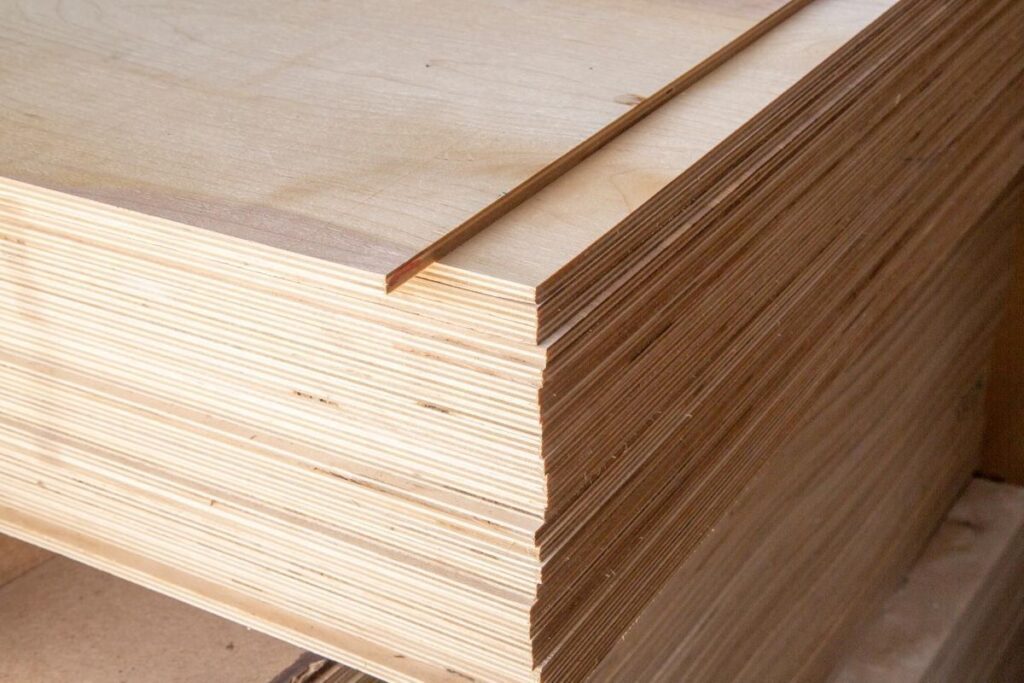
F14 grade plywood construction involves cross-laminating multiple veneer layers with alternating grain directions. This manufacturing process distributes stress evenly across the panel, preventing warping and splitting. The core veneers, whether pine or hardwood, contribute the bulk of the structural strength, whilst face veneers determine surface quality and appearance.
Manufacturers typically use thicker core veneers (2-4mm) to maximise structural efficiency, with thinner face veneers (1-2mm) providing the finished surface. This layering strategy optimises both material usage and structural performance, ensuring F14 grade plywood meets its designated stress ratings whilst maintaining economic viability for construction projects.
What Type of Adhesive Bond Is Used in F14 Grade Plywood and Why?
F14 grade plywood utilises an “A” bond classification, which refers to phenol formaldehyde adhesive—a thermoset resin that creates permanent bonds between veneer layers. This adhesive type represents the highest bond classification in plywood manufacturing, specifically engineered for structural applications where the material faces continuous exposure to demanding conditions.
The Chemistry Behind Phenol Formaldehyde Adhesive
Phenol formaldehyde adhesive forms through a chemical reaction between phenol and formaldehyde under controlled heat and pressure. Once cured, this adhesive creates irreversible cross-linked bonds that cannot be softened or broken down by heat or moisture. The molecular structure of these bonds provides exceptional resistance to environmental stressors that would compromise lesser adhesives.
The curing process occurs during the hot-pressing stage of plywood manufacture, where temperatures typically reach 140-160°C. This heat activates the resin, causing it to polymerise and penetrate deep into the wood fibres, creating a mechanical and chemical bond simultaneously.
Moisture Resistance Properties
A bond plywood demonstrates superior moisture resistance compared to other adhesive classifications. Phenol formaldehyde adhesive maintains its structural integrity even when subjected to prolonged water exposure, making it ideal for applications where moisture contact is inevitable. The adhesive does not swell, delaminate, or lose bonding strength in wet conditions.
Testing standards require A bond plywood to withstand boiling water tests without delamination—a rigorous assessment that simulates extreme moisture exposure. This characteristic proves essential for:
- External wall sheathing exposed to weather
- Subfloor installations in bathrooms and kitchens
- Formwork that contacts wet concrete
- Roofing applications subject to condensation
Durability and Longevity Advantages
The durability of phenol formaldehyde adhesive extends beyond moisture resistance. This adhesive type resists degradation from ultraviolet radiation, temperature fluctuations, and biological organisms. The bonds remain stable across temperature ranges from -40°C to +70°C, maintaining structural performance in diverse climates.
Chemical resistance represents another critical advantage. A bond plywood exhibits resilience against various chemicals commonly encountered in construction environments such as solvents, oils, and cleaning agents.
These durability attributes make F14 grade plywood suitable for:
- Marine applications where exposure to saltwater is prevalent
- Industrial settings with potential contact with corrosive substances
- Agricultural projects involving interaction with fertilisers or pesticides
By utilising phenol formaldehyde adhesive as the bonding agent, F14 grade plywood achieves superior strength properties necessary for demanding structural uses while ensuring longevity even under challenging conditions.
What Thickness Options Are Available for F14 Grade Plywood?
F14 grade plywood is manufactured in a plywood thickness range spanning from 7mm to 42mm, providing builders and contractors with multiple options to match specific structural requirements. This comprehensive range allows for precise selection based on the demands of each construction application.
The thinner options (7mm to 12mm) suit applications where weight reduction matters or where the plywood serves as a non-load-bearing component. These lighter panels work well for wall linings, cabinet backs, and temporary formwork where structural demands remain minimal.
Mid-range thicknesses (15mm to 19mm) represent the most commonly specified options for residential construction. These dimensions strike a balance between structural capability and material economy, making them ideal for:
- Floor underlayment in domestic settings
- Wall sheathing in timber-framed construction
- Roof sarking where moderate wind loads apply
- Internal bracing elements
Heavier gauge panels (21mm to 42mm) deliver superior load-bearing capacity for demanding structural applications. The increased thickness provides greater bending strength and stiffness, essential when spanning longer distances between supports or when supporting concentrated loads. Heavy-duty flooring systems, industrial formwork, and commercial roof decking frequently specify these thicker variants.
Load-bearing capacity increases exponentially rather than linearly with thickness. A 17mm panel doesn’t simply offer twice the strength of a 9mm sheet—the structural performance improvement proves far more substantial due to the physics of bending resistance. Engineers calculate these values precisely using the stress grade specifications combined with the actual thickness.
The 7mm to 42mm plywood thickness selection process depends on span tables provided in AS/NZS 2269 standards, which correlate thickness with maximum allowable spans for different loading conditions. A 17mm F14 panel might span 450mm centres for floor joists in residential applications, whilst a 25mm panel could extend to 600mm centres under similar loads.
Cost considerations also factor into thickness selection. Thicker panels command higher prices per square metre, so specifying the minimum thickness that meets structural requirements optimises project budgets without compromising safety or performance standards.
How Is F14 Grade Plywood Treated for Enhanced Durability?
Preservative treatment transforms standard F14 plywood into a material capable of withstanding harsh environmental conditions. Without treatment, plywood remains vulnerable to moisture penetration, fungal decay, and insect damage—particularly when used in exposed or high-humidity applications.
ACQ Treatment: The Industry Standard
ACQ treatment (Alkaline Copper Quaternary) represents the most widely adopted preservative method for F14 grade plywood in modern construction. This water-based treatment system combines copper compounds with quaternary ammonium compounds to create a powerful defence against biological deterioration. The treatment process involves pressure-impregnating the plywood with the ACQ solution, forcing the preservative deep into the wood fibres rather than merely coating the surface.
The copper component provides decay resistance by creating a toxic environment for wood-destroying fungi, whilst the quaternary ammonium compounds target insects and bacteria. This dual-action approach ensures comprehensive protection across multiple threat vectors.
Protection Against Biological Threats
Treated F14 plywood gains substantial insect attack protection, defending against termites, wood borers, and other destructive pests that typically compromise untreated timber products. The preservative chemicals remain active within the wood structure for extended periods, creating a long-lasting barrier that doesn’t require frequent reapplication.
Decay resistance becomes particularly critical in applications where plywood contacts soil, experiences regular moisture exposure, or operates in humid climates. Treated plywood maintains its structural integrity where untreated alternatives would soften, discolour, and eventually fail. The treatment extends the service life of F14 plywood from a few years to potentially several decades in challenging environments.
Treatment Levels and Hazard Classes
Preservative treatment intensity varies according to the intended exposure conditions:
- H2 treatment: Interior applications above ground with minimal moisture exposure
- H3 treatment: Exterior above-ground use with periodic wetting
- H4 treatment: Ground contact applications with constant moisture exposure
Each hazard class corresponds to specific preservative retention levels measured in kilograms per cubic metre. Higher hazard classes receive more intensive treatment, resulting in greater protection but also increased cost.
What Do the Face and Back Veneer Grades (CD or DD) Mean in F14 Grade Plywood?
The veneer grades CD and DD refer to the quality classification of the outer layers on each side of the plywood sheet. These letter designations provide a standardised way to communicate the visual appearance and surface characteristics of F14 grade plywood.
Understanding the Veneer Grading System
The grading system uses letters A through D, with A representing the highest quality and D indicating the lowest. Each plywood sheet receives two letter designations—the first letter describes the face (front) veneer, whilst the second letter describes the back veneer. F14 grade plywood typically features CD or DD grades, meaning the face veneer is either C or D grade, and the back veneer is D grade.
C Grade Veneer Characteristics:
- Allows tight knots up to 40mm diameter
- Permits some knotholes and splits
- May contain minor sanding defects
- Suitable for applications where moderate appearance matters
D Grade Veneer Characteristics:
- Permits larger knots and knotholes
- Allows splits and repairs
- May contain significant natural defects
- Designed for structural purposes where appearance is secondary
What CD Grade Indicates About Plywood Surface Quality
CD grade plywood offers a face veneer with fewer visible defects than the back. The C-grade face provides a reasonably smooth surface that can be painted or covered with finishing materials. This configuration works well for applications where one side remains visible, such as wall sheathing or subflooring where the face side receives floor covering.
The D-grade back contains more natural imperfections, including larger knotholes and patches. These defects don’t compromise structural integrity but make the surface less suitable for exposed applications. Builders often position the D-grade side towards hidden areas like wall cavities or beneath flooring.
What DD Grade Indicates About Appearance
DD grade plywood features D-grade veneers on both faces, prioritising structural performance over aesthetics. Both surfaces may contain knotholes, splits, and repairs that would be unacceptable in higher appearance grades. This grade serves applications where neither side remains visible or where the plywood receives complete coverage with other materials.
In Which Applications Is F14 Grade Plywood Commonly Used?
F14 grade plywood is a versatile material used in both residential and commercial construction projects. Its moderate strength and affordable price make it an ideal choice for applications where structural integrity is important, but extreme load-bearing capacity is not required.
Flooring Applications
One of the most common uses for F14 grade plywood is in flooring installations. It is used as subflooring or underlayment in both residential and light commercial settings, providing a stable base for finished floor coverings. The F14 stress rating of the plywood is strong enough to support regular foot traffic and furniture loads while spanning standard joist spacings of 450mm to 600mm centres. This makes it particularly attractive for large-scale housing developments where budget considerations influence material selection without compromising structural requirements.
Wall Sheathing and Bracing
F14 plywood’s structural properties and dimensional stability make it beneficial for wall sheathing applications. It provides lateral bracing for timber-framed walls, resisting racking forces from wind loads and seismic activity. When properly installed with appropriate fastening schedules, F14 plywood creates a rigid diaphragm that transfers loads to the foundation system. The CD or DD face grades are sufficient for wall sheathing since these surfaces typically receive cladding or interior lining materials that conceal the plywood substrate.
Roofing and Sarking
In roofing installations, F14 grade plywood is used as roof sarking or decking material beneath tile, metal, or membrane roofing systems. It spans between roof trusses or rafters while supporting the weight of roofing materials and occasional maintenance loads. The A-bond adhesive specification ensures that the plywood maintains its structural integrity when exposed to moisture during construction or from potential roof leaks. Treated F14 plywood offers additional protection in high-humidity environments or regions with elevated decay risk.
Formwork and Concrete Applications
Another significant application of F14 grade plywood is in construction formwork. It is used to create temporary moulds for concrete pours in foundations, columns, beams, and slabs. The strength of the plywood allows it to withstand the pressure exerted by wet concrete during curing, ensuring accurate shaping and dimensional control of structural elements.
How Does F14 Grade Plywood Comply With Australian/New Zealand Standards?
F14 grade plywood must meet the requirements outlined in AS/NZS 2269, the primary structural plywood standards governing manufacturing and performance in Australia and New Zealand. This standard establishes minimum specifications for structural plywood used in construction, covering everything from veneer quality to adhesive performance and stress grading systems.
Stress Grading and Mechanical Properties
The AS/NZS 2269 standard divides structural plywood into different stress grades based on their mechanical properties. F14 grade plywood achieves its classification through rigorous testing that measures:
- Bending strength – The plywood must demonstrate a minimum modulus of rupture of 14 MPa (megapascals) in the direction parallel to the face grain
- Modulus of elasticity – Stiffness requirements ensure the material won’t deflect excessively under load
- Panel shear strength – The ability to resist forces that could cause layers to separate or slide
- Bond quality – Adhesive must pass boil tests demonstrating moisture resistance
Manufacturing Compliance and Quality Control
Manufacturing facilities producing F14 grade plywood undergo regular audits to verify compliance with these structural plywood standards. Independent testing laboratories conduct sample testing from production batches, checking dimensional tolerances, moisture content (typically maintained between 8-15%), and mechanical properties.
Marking Requirements for Identification
The standard also mandates specific marking requirements. Compliant F14 plywood panels display stamps or labels indicating:
- The stress grade (F14)
- Bond type (typically A-bond)
- Manufacturing standard (AS/NZS 2269)
- Manufacturer identification
- Treatment type if applicable
Consistency Across Manufacturers
Quality assurance protocols embedded within AS/NZS 2269 ensure consistency across different manufacturers. The standard specifies acceptable veneer grades, permissible defects, repair methods, and manufacturing tolerances. This standardisation means builders and engineers can specify F14 grade plywood with confidence, knowing it will perform predictably regardless of the supplier.
Certification Process for Assurance
The certification process requires manufacturers to maintain detailed production records and implement quality control systems. Third-party certification bodies verify that production methods, raw materials, and finished products consistently meet the standard’s requirements. This independent oversight provides an additional layer of assurance for construction professionals.
F14
Conclusion
Understanding the specifications of F14 grade plywood reveals why this material has become a cornerstone in modern construction projects. The F14 stress rating, combined with its phenol formaldehyde adhesive bond and versatile thickness options, delivers structural performance that builders can rely on without breaking project budgets.
The summary of F14 grade plywood specifications demonstrates a carefully engineered product:
- F14 stress grade providing verified bending strength and stiffness
- A-bond adhesive ensuring moisture resistance and long-term durability
- Thickness range from 7mm to 42mm accommodating diverse structural needs
- Treatment options like ACQ for enhanced protection in challenging environments
- CD or DD veneer grades balancing appearance with functionality
- Compliance with AS/NZS 2269 guaranteeing safety and reliability
This balance between strength and cost-effectiveness positions F14 grade plywood as an intelligent choice for flooring systems, wall sheathing, roofing substrates, and formwork applications. The material’s proven track record in residential and commercial projects speaks to its versatility and dependable performance characteristics.
Consider F14 grade plywood for your next construction project, particularly where moderate structural loads require economical yet reliable solutions. Each building application presents unique demands—consulting with structural engineers or building professionals ensures you select the appropriate grade, thickness, and treatment level for your specific requirements. The right specification choice today prevents costly modifications or performance issues tomorrow.
FAQs (Frequently Asked Questions)
What is F14 grade plywood and why is it important in construction?
F14 grade plywood is a type of structural plywood that meets specific strength and durability standards, making it essential in the construction industry. It offers a balance between strength and cost-effectiveness, commonly used for flooring, wall sheathing, roofing, and formwork.
What does the F14 stress grade indicate about plywood strength?
The F14 stress grade signifies the plywood’s bending strength and stiffness, ensuring it performs reliably under structural loads. This grading system helps builders select plywood suitable for demanding applications requiring high structural performance.
What materials are used in manufacturing F14 grade plywood?
F14 grade plywood is typically made from 100% plantation pine or hardwood veneers. The choice of these materials contributes to the plywood’s overall strength and durability, which are critical for its structural use.
What type of adhesive bond is used in F14 grade plywood and why?
F14 grade plywood uses an ‘A’ bond adhesive made from phenol formaldehyde. This adhesive provides excellent moisture resistance and durability, which are vital properties for structural applications exposed to varying environmental conditions.
What thickness options are available for F14 grade plywood?
F14 grade plywood is available in thicknesses ranging from 7mm to 42mm. The thickness selected affects the load-bearing capacity and suitability of the plywood for different construction needs.
How is F14 grade plywood treated for enhanced durability?
To enhance durability, F14 grade plywood often undergoes preservative treatments such as ACQ (Alkaline Copper Quaternary). These treatments improve resistance to decay and insect attacks, making the plywood suitable for outdoor or damp environments.
See more about: 6 Key Benefits of Using lvl formwork timber Over Traditional Wood

